
When two systems use the same panel, it's easy to assume the choice doesn't matter.
That's not the case with Medallion I and Medallion II. While both are batten seam systems built on the same panel profile, they differ in seam profile. Understanding that distinction upfront helps ensure the finished roof aligns with the original design intent.
Same Panel, Different Seam Expression
Medallion I and Medallion II are architectural standing seam systems designed for installation over solid decking and commonly used in residential and light commercial applications.
Both systems use concealed fasteners and a snap-together panel with a batten cap applied over adjoining panels to complete the seam, creating the defined vertical lines associated with standing seam roofing.
They are designed for a minimum slope of 3:12 and are not intended for onsite forming, which should be considered when planning panel lengths and installation logistics.
The difference between the two systems comes down to rib height and batten cap profile.
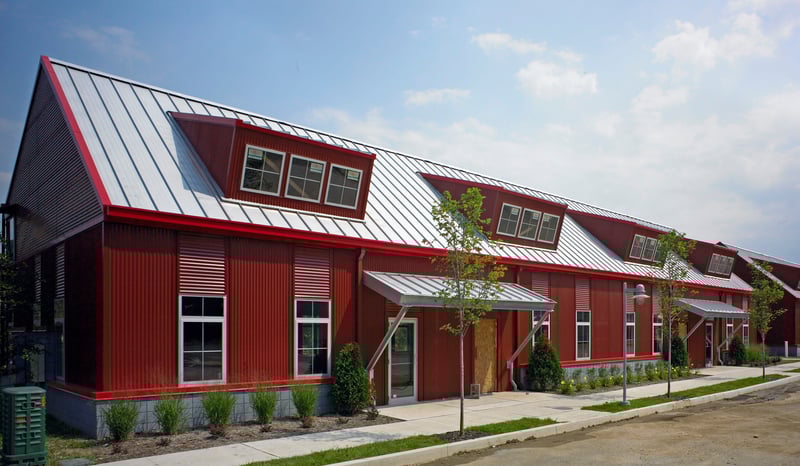
What Is the Key Difference Between Medallion I and Medallion II?
The distinction between Medallion I and Medallion II is straightforward.
-
Medallion I features a narrower batten cap and a 1" rib height, creating a more refined, lower-profile seam.
-
Medallion II uses a wider batten cap and a taller 1½" rib height, resulting in a more pronounced seam with greater depth.
This is not a performance difference. It is strictly a difference in seam profile, which becomes highly noticeable across the finished roof.
How Does the Seam Profile Difference Show Up on the Finished Roof?
Medallion I is often selected when the goal is a cleaner, more understated result. The seams are defined but do not dominate the overall roof.
Medallion II creates a stronger visual rhythm, with seams that are more prominent across larger roof planes and more visible from a distance.
In both cases, the seam pattern becomes part of the overall design. The difference is how prominent that pattern appears.
What Does the Seam Profile Mean for Design and Installation?
Although the panel is the same, the seam profile influences both design intent and execution.
For design, batten cap width affects seam spacing across the roof and influences visual rhythm, shadowing, and overall scale.
For installation, panel modularity determines how consistently the seams track across the roof. Straight lines, consistent spacing, and alignment across transitions are critical. As panels walk, seams can drift out of alignment, and spacing can change across the roof. Establishing the layout early and maintaining consistency throughout the installation are essential to achieving the intended outcome.
How to Choose Between Medallion I and Medallion II for Your Project
The decision between Medallion I and Medallion II is not about performance or installation method. Both systems are built on the same panel and install using the same general approach.
The difference comes down to seam profile. Medallion I provides a more refined, lower-profile seam. Medallion II delivers a taller, more defined seam pattern.
Selecting the appropriate system ensures the seam profile is established upfront and carried consistently through installation.


.png?width=767&name=How%20to%20Install%20Metal%20Roofing%20Over%20Existing%20Metal%20Roofs%20(1).png)
.jpg?width=767&name=How%20to%20install%20a%20metal%20roof%20that%20lasts%20in%20coastal%20environments%20(2).jpg)



Comments on this article:
Scroll down to the bottom to submit a comment and join the conversation. Need help or have a question? Please contact us. Looking for a distributor or contractor? Please click here to get started.