Commercial property managers rarely evaluate roofing based only on the lowest upfront price. Asset managers, facility owners, and long-term property investors usually ask a different question first: What is this roof going to cost over the life of the building? That shift in thinking changes the conversation quickly.
A metal roof can carry a higher upfront cost than asphalt shingles, but commercial property managers often choose metal anyway because they evaluate factors many homeowners don't consider: lifecycle replacement cost, annual energy costs, insurance impact, maintenance exposure, and long-term property value.
Instead of focusing only on what the roof costs today, they look at what the roof is likely to cost over decades of ownership. That same approach can help homeowners make a more informed decision.
Commercial property managers are trained to evaluate buildings as long-term assets, and that mindset often changes how roofing decisions are made. Homeowners can apply that same thinking when comparing roofing systems for long-term ownership, operating costs, and resale value. It is one of the largest protective systems on the home and one of the few upgrades that can affect operating costs, maintenance planning, insurability, and curb appeal all at the same time.
How Do Commercial Property Managers Think About Roofing ROI?
Commercial property managers evaluate roofing as a lifecycle investment, not a short-term line-item expense. The cheapest roof in year one is not always the least expensive roof over 40 or 50 years. That approach is often referred to as lifecycle costing, and it is standard practice in commercial property management.
Instead of asking only which roof has the lowest installation cost, commercial property managers typically evaluate how long the roof is expected to last, how many replacement cycles could occur during ownership, what maintenance costs may be involved, whether the roof could influence energy consumption, and how future buyers may view the roof during resale. That broader view changes how roofing systems are compared.
For example, a traditional asphalt shingle roof may initially cost less than a metal roof. But if shingles require replacement every 15 to 20 years, while a properly installed metal roofing system may remain in service for 50 years or longer, those are not equivalent purchases over time.
Over a 50-year ownership window, multiple reroof cycles may potentially be avoided with metal roofing. That can reduce future tear-off labor, disposal costs, material replacement expenses, contractor disruption, and the scheduling challenges that often come with repeated reroofing projects.
Research published by the Metal Construction Association projects Galvalume®-coated steel roofing systems can perform for 60 years or more under normal conditions. Asphalt shingles, meanwhile, are commonly designed around significantly shorter service life expectations—often 12-15 years.
Environmental conditions also matter. The Florida Office of Insurance Regulation has publicly discussed concerns surrounding how asphalt roofing systems perform under sustained wind exposure and harsh weather conditions over time, particularly as roofs age. In severe-weather regions, factors like storm exposure, climate, installation quality, and long-term maintenance can all affect how long a roof realistically remains in service.
This is one of the biggest differences between how commercial property managers and homeowners often evaluate roofing. They are not comparing one roofing invoice to another. They are comparing decades of ownership cost.
That same framing is one reason many homeowners begin to evaluate metal roofing differently after living through one or two asphalt reroofing cycles. Many properly installed Galvalume®-substrate metal roofing systems are selected because they may align more closely with the home's remaining useful life. For homeowners evaluating long-term ownership costs, that distinction matters.
Learn about the advantages of a metal roof vs. shingles.
How Much Can a Metal Roof Reduce Home Energy Costs?
Commercial property managers also pay close attention to long-term operating costs, and energy consumption is one of the largest expenses they monitor over the life of a building. Roofing matters in that equation because the roof directly affects how much heat enters the structure throughout the day.
That is one reason reflective metal roofing systems are often evaluated not only for durability, but also for their potential effect on cooling demand over time.
Reflective metal roofing can reduce cooling energy costs by up to 20% under typical conditions, according to the U.S. Department of Energy. Metal roofing reflects more solar heat away from the home instead of absorbing and transferring that heat into the attic space.
When roofing materials absorb heat, attic temperatures rise. That heat eventually transfers into the living space, forcing HVAC systems to work harder to maintain indoor temperatures.
Research from Oak Ridge National Laboratory examined above-sheathing ventilation performance in roofing assemblies and found substantial temperature differences between roofing materials. In testing, shingle-covered attic spaces operated significantly hotter than ambient outdoor temperatures, while ventilated metal roof assemblies remained much closer to outside air temperature.
For homeowners, the takeaway is straightforward: reducing heat buildup at the roof level may help reduce the cooling burden placed on the home.
According to the Department of Energy, heating, cooling, and ventilation account for roughly 35% of household energy use. Roofing materials can contribute to that number more than many homeowners realize, particularly in warmer climates and regions with long cooling seasons.
Modern metal roofing systems have also evolved significantly from what many homeowners picture when they hear the term “metal roof.”
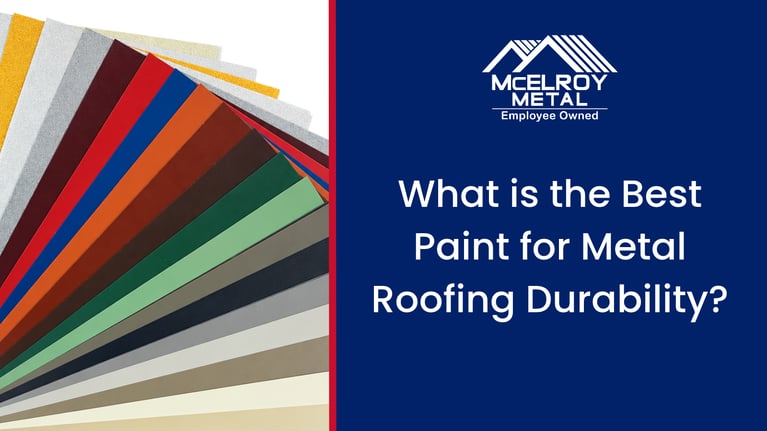
Today's Kynar 500® PVDF paint systems often include cool-roof pigment technology designed to improve solar reflectivity, including across many darker color options. Historically, lighter roofing colors were more closely associated with reflective performance, but coating advancements have expanded the range of colors homeowners can consider while still supporting energy-efficiency goals.
The exact energy savings a homeowner experiences can vary depending on climate, insulation levels, ventilation design, roof color, roof geometry, and HVAC performance.
Commercial property managers often evaluate roofing as part of a building's long-term operating-efficiency strategy. Homeowners can apply that same mindset when comparing roofing systems over decades of ownership.
Can a Metal Roof Actually Lower Your Homeowners Insurance Premium?
In many cases, yes. Most steel roofing systems carry a UL Class 4 impact resistance rating, which is the highest classification available under the UL 2218 standard. In hail-prone and hurricane-prone regions, insurance carriers often offer premium discounts for homes with Class 4 roofing systems, although eligibility varies by state, carrier, and policy structure.
This is another area where commercial property owners often think differently from homeowners. Commercial property managers frequently evaluate insurance implications before selecting roofing systems because annual premium savings can compound significantly over time. Homeowners sometimes discover those savings only after installation.
The UL 2218 standard evaluates how roofing materials respond to simulated hail impacts. A Class 4 rating represents the highest impact-resistance classification within that testing framework. In regions where hailstorms or severe weather are common, some insurance carriers may offer discounts for qualifying roofing systems because the materials may help reduce claim frequency or claim severity.
Wind performance also plays an important role in some areas. In Gulf Coast regions and other hurricane-prone environments, the Insurance Institute for Business & Home Safety®'s FORTIFIED Roof program has gained increased attention in recent years. Homes built or reroofed to FORTIFIED standards may qualify for additional insurance incentives depending on location and carrier participation.
IBHS has published research indicating that homes with FORTIFIED roofing systems experienced fewer claims and reduced claim severity following multiple major hurricane events. That does not mean every homeowner will automatically qualify for discounts.
Discount structures often depend on the roofing product selected, installation method, local building codes, wind zone requirements, documentation provided during installation, and state-specific insurance programs. That is why homeowners should contact their insurance provider before signing a roofing contract.
The potential savings may be more meaningful than expected. For homeowners in hail or hurricane regions, the roof may influence more than just weather protection. Insurance Journal also quoted State Farm Loss Mitigation Coordinator Jack Stanton, who discussed how impact-resistant roofing products may help reduce hail-related losses, which is one reason many carriers continue to encourage qualifying roof upgrades in storm-prone areas.
Does a Metal Roof Add Resale Value to a Home?
Commercial property managers do not just look at whether a roof is functional today. They also consider how much remaining service life the roof has and whether future buyers are likely to view it as a long-term asset or an upcoming expense.
That same mindset applies in residential real estate. A newer metal roof with substantial remaining service life can help reduce concerns about future reroof costs during the buying process. In contrast, an aging roof may create additional pressure in negotiations because buyers often factor potential replacement costs into their overall evaluation of the home.
Roofing also influences how buyers perceive the property overall. Because the roof is one of the most visible exterior systems on a home, its condition, appearance, and expected longevity can all contribute to buyer confidence and curb appeal.
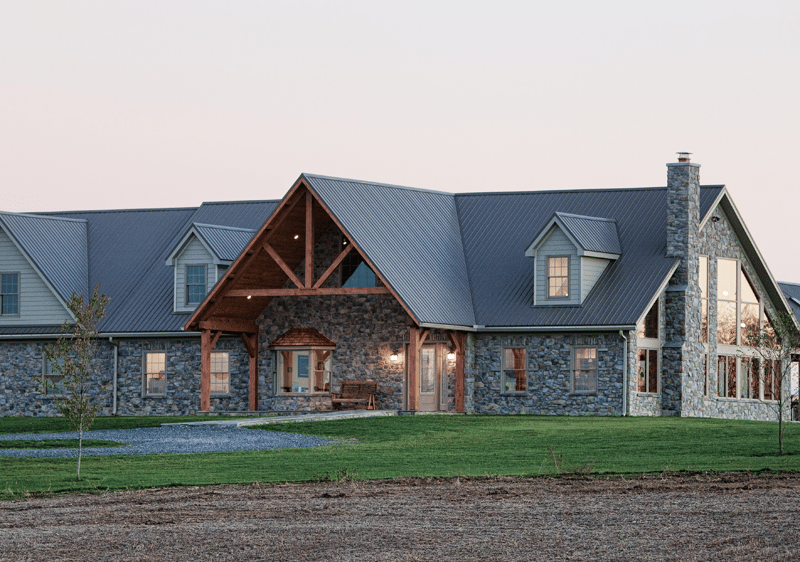
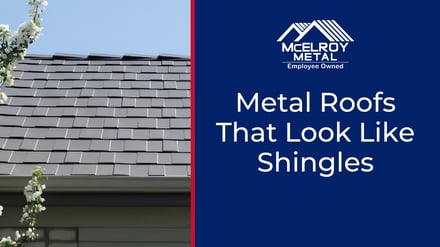
Modern metal roofing systems are available in a wide range of profiles, finishes, and colors that look substantially different from the older agricultural-style metal roofs many homeowners still picture when they first hear the term “metal roof.” Standing seam systems, exposed fastener panels, and architectural profiles each create a different visual effect, allowing homeowners to select a roof that better complements the style of the home.
Many manufacturers now offer home visualizer tools that allow homeowners to preview different panel profiles and colors before making a final decision. That can help homeowners evaluate how the roof may coordinate with siding, brick, stone, trim, and other exterior elements before installation begins.
Long-term appearance also matters because the roof may remain visible on the home for decades. Kynar 500® PVDF coating systems are often selected because their long-term color retention and finish performance can help support the appearance homeowners expect from a roof designed for extended service life.
Unlike some remodeling projects, roofing upgrades are not always measured through a simple national ROI percentage. Local market conditions, climate, buyer preferences, installation quality, and the age of the existing roof can all influence how buyers perceive value during resale.
Commercial property managers understand that buyers often evaluate buildings partly based on future maintenance exposure and long-term ownership costs. Homeowners can apply that same perspective when comparing roofing systems, particularly if long-term ownership and future resale value are part of the decision.
Final Thoughts
Commercial property owners rarely evaluate roofing based only on installation cost. Instead, they typically look at the broader financial picture, including expected service life, potential reroof cycles, energy performance, insurance implications, and how the roof may influence long-term property value.
Homeowners can evaluate roofing the same way. For some families, the lower upfront cost of asphalt shingles may still make sense based on budget, ownership timeline, or project goals. For others, a metal roof may align more closely with long-term ownership plans and lifecycle cost priorities.
The key is making the comparison honestly. Not just comparing installation cost today, but evaluating what the roof may cost, save, or contribute over decades of ownership. That is the same long-term framework commercial property managers have used for years. And increasingly, homeowners are looking at roofing the same way.


.jpg?width=767&name=Can%20You%20Paint%20a%20Metal%20Roof_%20(4).jpg)
.png?width=440&height=293&name=R%20Panel%20vs%20Ag%20Panel%20(1).png)
Comments on this article:
Scroll down to the bottom to submit a comment and join the conversation. Need help or have a question? Please contact us. Looking for a distributor or contractor? Please click here to get started.