The short answer is yes, and it's becoming the preferred approach for commercial building owners tired of the recurring expense and disruption of traditional roof replacement. Metal-over-existing-roof systems, commonly called retrofit or recover applications, have been protecting commercial buildings for more than four decades. The approach eliminates tear-off costs, avoids business disruption, and delivers a roof system designed to last 60 years or more.
But the longer answer involves understanding which existing roof types qualify, what structural considerations apply, and why this approach has shifted from a niche solution to a mainstream commercial roofing strategy.
What Types of Existing Roofs Can Accept a Metal Recover?
Metal recover systems work over most existing commercial roof types, though the installation approach varies based on the substrate. Pre-engineered metal buildings represent the most straightforward application: the new metal panels attach through the existing roof into the original structural purlins. The process preserves the building's structural integrity while essentially creating a new roof assembly above the old one.
Built-up roofing, modified bitumen, and single-ply membrane systems can also accept metal recovers, though these applications typically require engineered sub-framing systems. The framing creates the structural attachment points and can introduce positive slope to improve drainage, which is particularly valuable for buildings plagued by ponding water issues on flat membrane roofs.
The existing roof's condition matters less than you might expect. Since the new metal system provides complete weather protection, the old roof primarily serves as a working platform during installation and an additional layer of protection afterward. Localized damage, deteriorated seams, and even areas with active leaks can remain in place. The retrofit approach essentially makes those problems disappear under the new assembly.
How Does Metal-Over-Metal Reroofing Actually Work?
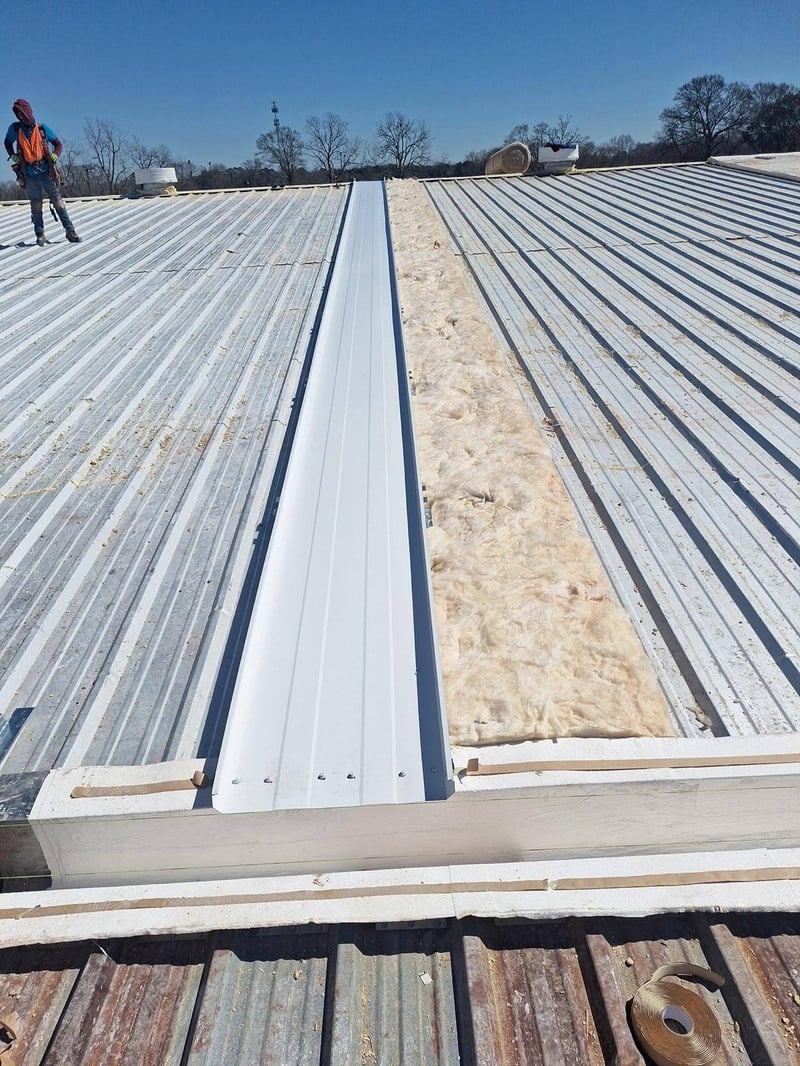
The installation process depends on whether you're covering another metal roof or a membrane system, but the fundamental principle remains consistent: attachment through the existing roof into the building's structure.
For metal-over-metal applications on pre-engineered buildings, the new standing seam panels attach via clips that penetrate through the old panels and fasten to the structural purlins below. The most advanced systems use continuously roll-formed multi-span clips that run the full length of each panel, creating substantially stronger attachment than the individual clips found in many competing systems. These multi-span clips can triple the wind uplift capacity compared to the original roof. This is a significant structural upgrade that would cost far more to achieve through conventional tear-off and replacement.
Retrofit applications over flat membrane roofs involve more extensive sub-framing. Engineered steel framing attaches to the existing structure at calculated intervals, creating the substrate for the new metal panels. This approach allows designers to introduce roof slope where none existed, improving drainage and eliminating the ponding issues that accelerate membrane deterioration.
Why Are Commercial Building Owners Choosing Recover Over Tear-Off?
The business case for recover over tear-off replacement extends well beyond avoiding the obvious tear-off and disposal costs. For most commercial building owners, the decisive factor is operational continuity.
Tear-off projects expose the building interior to weather during the removal phase. That means relocating inventory, protecting equipment, and potentially halting operations for days or weeks depending on building size and weather conditions. Manufacturing facilities face production shutdowns. Warehouses scramble to protect stored goods. Retail locations may need to close entirely.
Recover installations happen entirely above the existing roof surface. Business operations continue uninterrupted. Employees stay dry. Inventory stays protected. The only evidence that the project is happening is the sound of installation crews working overhead.
Safety considerations also favor the recover approach. During tear-off projects, installation crews work over exposed framing, often 20 to 30 feet above the floor, with open areas that create fall hazards. Recover installations keep crews on a solid working surface throughout the project. The risk of falling debris that could injure employees or damage equipment below drops significantly.
What About Energy Code Requirements?
Here's where the recover approach offers a substantial financial advantage that many building owners overlook until they're deep into project planning.
Section C-503 of the International Energy Conservation Code requires building owners to bring structures up to current insulation standards when altering the building, including roof replacement. That means a tear-off project can trigger mandatory insulation upgrades that add significant cost beyond the roofing work itself. Depending on the building's existing insulation levels and current code requirements, adding six inches of additional insulation isn't uncommon. The insulation cost is only part of the equation. Labor to remove old materials, install new insulation, and the extended project timeline all add up quickly.
Recover applications, by contrast, are specifically exempted from this requirement. The code recognizes that recover projects don't increase the building's energy use, so the mandatory upgrade doesn't apply. This exemption allows building owners to make their own economic decisions about insulation upgrades rather than having the government mandate the investment. Some owners embrace the opportunity to exceed new requirements during a recover project. Others determine that the additional expense doesn't make economic sense for their specific building use. Either way, the choice remains with the owner.
How Do Lifecycle Costs Compare Between Recover and Replacement?
The initial cost comparison between metal recover and membrane replacement often favors the membrane option, sometimes by a meaningful margin. But that initial cost snapshot misses the complete financial picture.
Metal roofing systems built on Galvalume® substrates deliver service lives of 60 years or more according to research published by the Metal Construction Association. Membrane systems, even premium options, typically require replacement every 17 to 23 years depending on the specific product and installation conditions. That means a building owner choosing membrane over metal will face the replacement expense and disruption two or three additional times over the same period.
Lifecycle cost analyses conducted using RCI Interface methodology and validated by Ducker Worldwide Survey data reveal striking differences. For a 10,000-square-foot building, total 25-year costs range from $209,000 to $236,000 for membrane systems when accounting for initial installation, ongoing maintenance, and eventual replacement. For the same building, a metal retrofit system costs approximately $93,000, including maintenance over the same 25-year period with no replacement required.
The payback period on the initial cost premium for metal retrofit runs between 3.74 and 4.5 years compared to membrane alternatives. Beyond that break-even point, every year represents pure savings.
Can Recover Systems Handle High Wind Zones?
Building owners in hurricane-prone coastal areas and high-wind regions often assume that tear-off replacement is necessary to meet updated wind load requirements. That assumption leaves money on the table.
Modern recover systems using multi-span clip technology can actually exceed the wind uplift performance of the original roof. Depending on the specific system and application, these continuously roll-formed clips can triple the wind uplift capacity without removing a single panel from the existing roof. The structural enhancement happens during the recover installation, not through expensive reinforcement of the original building frame.
This capability has earned metal roofing systems endorsement from FEMA for coastal and hurricane-prone installations. The agency's research confirms that properly specified metal systems outperform other materials in wind uplift testing, making recover a particularly attractive option for buildings in regions where wind codes have tightened since original construction.
When Does Tear-Off Make More Sense Than Recover?
Recover isn't the right solution for every situation. Structural concerns that require access to the deck or framing below necessitate tear-off. Buildings where excessive roof layers already exist may face code limitations on adding another system. Some architectural applications demand specific substrate conditions that only new construction provides.
The building's intended future also factors into the decision. An owner planning to sell within a few years may prioritize lowest initial cost over lifecycle value. A building scheduled for demolition or major renovation doesn't need a 60-year roof.
But for the majority of commercial building owners facing routine re-roofing decisions, particularly those who have already experienced the disruption and expense of membrane replacement once or twice, metal recover represents the opportunity to make this roof their last roof.
How Do You Find a Contractor Qualified for Recover Work?
Retrofit and recover installations require specialized expertise that differs substantially from general roofing work. The engineering considerations, attachment methods, and flashing details involve skills that many competent roofers simply haven't developed.
Look for contractors with specific recover experience, not just roofing experience generally. Ask about square footage of completed recover projects, building types they've worked on, and manufacturer training credentials. The best manufacturers invest heavily in hands-on training programs that go beyond online certifications. McElroy Metal, for example, offers two-day hands-on training classes and maintains a network of more than 500 factory-trained contractors specifically qualified for recover installations.
The questions you ask during contractor selection directly affect your project outcome. How long have they worked specifically with recover applications? What manufacturer systems are they certified to install? Can they provide references from similar building types? Do they have access to manufacturer technical support during the project?
Partnering with a manufacturer who specializes in recover systems and can connect you with qualified contractors in your area streamlines the process considerably. The manufacturer brings engineering expertise, tested system assemblies, and quality assurance to the project. The contractor brings installation skill and local knowledge. Together, they deliver the outcome that justifies the initial investment: a roof that performs for decades rather than years.


.jpg?width=767&name=Can%20You%20Paint%20a%20Metal%20Roof_%20(4).jpg)
.png?width=440&height=293&name=R%20Panel%20vs%20Ag%20Panel%20(1).png)
Comments on this article:
Scroll down to the bottom to submit a comment and join the conversation. Need help or have a question? Please contact us. Looking for a distributor or contractor? Please click here to get started.