Picture this: you've invested in a beautiful metal roofing system designed to last 50 years or more, only to watch it start looking shabby within five years. What went wrong? The culprit is often cutting corners on the paint system; it's like buying a Ferrari and filling it with the cheapest gas you can find.
There's nothing more frustrating than walking onto a job site where the owner is already complaining about fading, especially when you know the headache could have been completely avoided. The truth is, not all metal roof coatings are created equal. Sure, substrate quality and installation skills matter, but decades of industry experience have taught us this: the coating system you choose will make or break how that roof looks twenty years from now.
After observing project after project across everything from desert heat to Minnesota winters, one thing stands out clearly: PVDF coatings are in a class of their own when you're talking about real durability.
What Are the Main Paint Systems for Metal Roofing?
Balancing quality with project cost means understanding that there are three coating options worth discussing, each with its unique place in the market.
Polyester coatings are the least expensive option and ideally are used only in interior applications. Choosing them for an exterior roof sets everyone up for disappointment.
Silicone-Modified Polyester (SMP) is where things get interesting. These systems contain silicone resins that enhance UV resistance and flexibility. They're not bad; plenty of jobs use them where budgets are tight, and owners understand they're not getting premium performance.
PVDF coatings offer the best performance of the three. You might know these as Kynar 500® resin-based coatings. This is fluoropolymer technology that has been battle-tested for more than 60 years. When architects specify high-end commercial work, this is what they want.
Here's what most people don't think about in paint chemistry: every coating has three main components: pigments for color, resins that hold everything together and protect against environmental damage, and solvents that help with application.
Why Does PVDF Perform So Well in the Real World?
Forget the lab tests for a minute. Consider a job down in Louisiana that opened many eyes. Identical panels were installed side by side, with everything the same except for the coating system. Eight years later, the performance difference was stark. The PVDF panels still looked sharp, while the SMP panels had faded enough that the difference was noticeable from the parking lot.
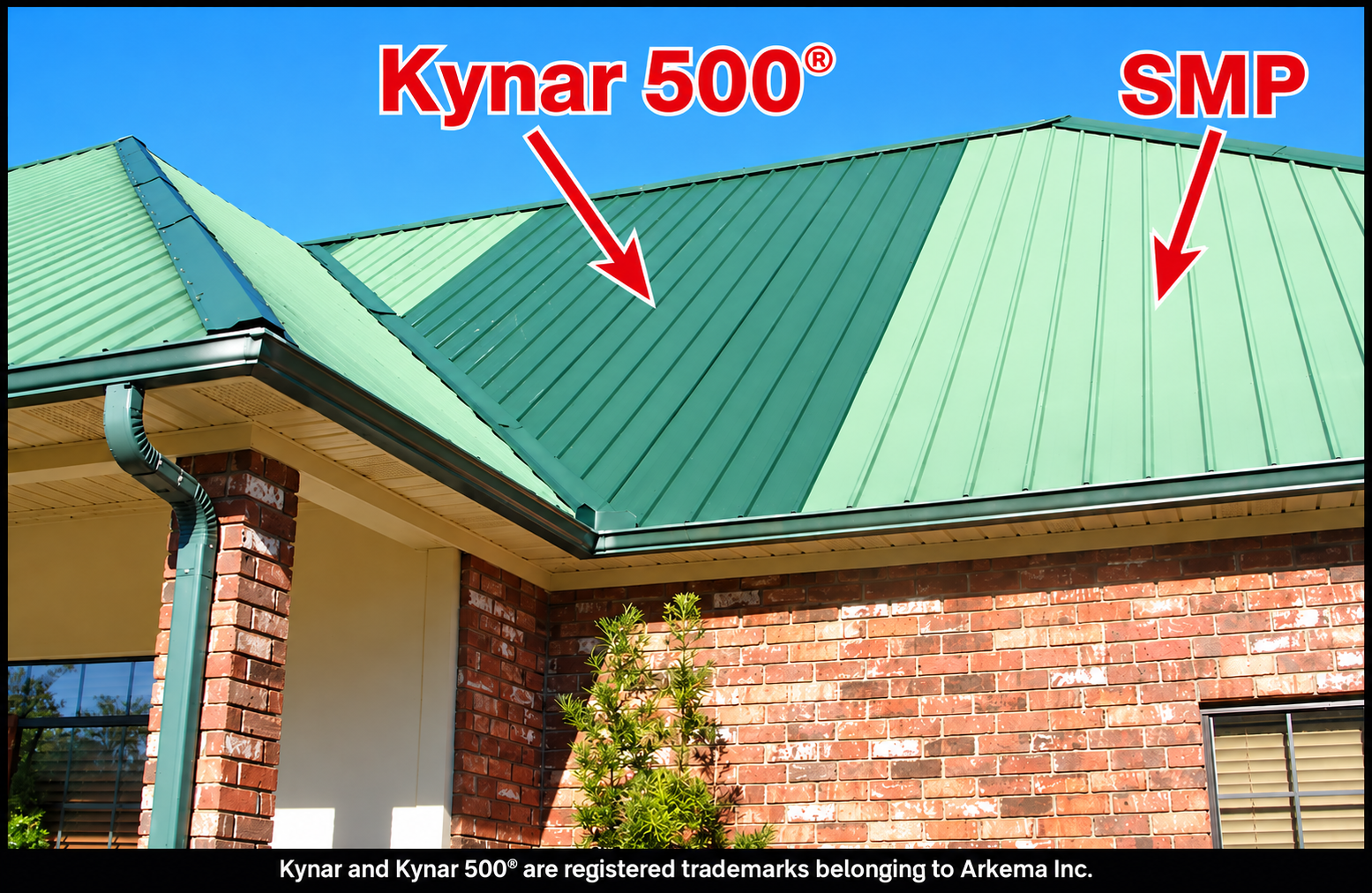
That's not some cherry-picked example; it's what happens when these systems go head-to-head in the real world. Brutal UV exposure and temperature extremes show how well the PVDF kept doing its job, while the SMP paint showed visible fade and chalking.
Here's something most people don't know: PVDF systems for metal roofing typically warrant against fading within 5 Delta E units, which is the technical measurement, while SMP allows up to 7 Delta E units. That's a difference you can see with your naked eye, and so can customers and tenants.
Then there's chalk resistance, which occurs when the coating starts to break down, resulting in a powdery substance on the surface. Chalk is measured by rubbing a special black fabric, such as felt or velvet, over the painted surface. The amount of white residue transferred to the fabric is compared to a rating scale from 10 to 1:
- 10 = No chalking
- 1 = Severe chalking
Results are typically checked after set intervals, such as 1,000 or 2,000 hours in accelerated weathering or years in real-world exposure.
Nobody wants their roof to look like it needs a good washing. PVDF systems also maintain high performance in chalk resistance, often scoring above eight on industry rating scales, while SMP coatings may drop as low as six over time. And when a roof starts to fade or chalk, building owners notice.
The track record speaks for itself, too. PVDF coatings have delivered more than 60 years of real-world performance. Architects didn't make this their go-to choice for high-end projects because of slick marketing. They did it because these coatings deliver decade after decade.
How Can the Paint System Affect Long-Term Cost?
Here's a conversation that happens too often: "But the SMP is cheaper!" Yes, it is. Until those calls come ten years later about repainting or replacement.
Here's what happens when you opt for the cheaper option. The panels with SMP coating began to show fading after just a few years. A few years in, some building owners are already thinking about repainting. Meanwhile, PVDF panels still provide their like-new curb appeal.
Think about what that means for customer budgets. SMP may require attention in 10-15 years, depending on the owner's initial color selection and aesthetic expectations. PVDF? Buildings 25-30 years old still look great. The math isn't complicated: spend a little more upfront, save a lot more later.
But it's not just about money. What about reputation? When the roof starts looking rough, and the owner asks why it doesn't look like it used to, you want to be able to say, "We recommended the premium coating, remember?" rather than hoping they don't notice the fading.
Property values matter too. A building with a weathered and worn roof doesn't exactly scream "well-maintained investment." Property managers receive complaints from tenants about the building's appearance, and guess what they blame first? The roof is visible from the street.
How Does Weather Affect Metal Roof Paint?
UV radiation is coating enemy number one. Down south and up in the mountains, that UV is even more intense. Coatings that appear bulletproof in the lab often fail under real-world sun exposure.
Weather piles on, too. Temperature swings can reach 100°F between summer and winter, acid rain erodes everything, and near the coast, salt air corrodes anything it touches. Plus, buildings have to deal with industrial pollutants, bird droppings, and general environmental nastiness.
Temperature cycling alone can cause expansion and contraction that cracks inferior coatings. Metal moves, and if the coating can't flex with it, something will give. High-quality coatings must withstand these stresses for decades without deteriorating.
Why Does the Metal Substrate Matter?
Here's something that matters more than most people realize: what's under that paint. Galvalume® steel makes an excellent foundation because it doesn't just sit there; it actively protects against corrosion while providing a stable surface for the coating to adhere to. The metallic coating and paint work together like a team.
Factory-applied coatings are desirable whenever possible. Field-applied jobs can look great initially, but you can't beat the controlled conditions of a coil coating line. The right temperature, humidity, surface preparation, and oven-baked curing process: that's how you get maximum performance from any coating system.
How Do You Choose Between SMP and PVDF?
Every project is different. For some projects, SMP may be the right choice, especially when cost is a bigger consideration. But if long-term color retention and appearance are important, PVDF may be worth the additional upfront cost.
The premium for PVDF represents a modest upfront investment when viewed through the lens of lifecycle costs. Spread that additional cost over decades of superior performance, and the annual difference becomes relatively small compared to the benefits. Many building owners find the long-term value proposition compelling when they consider the avoided replacement costs and maintained appearance.
Location matters too. Building in Florida, Arizona, or anywhere with serious UV exposure makes the coating choice even more critical. The same applies to coastal areas, where salt air constantly attacks everything, or industrial zones with air pollutants.
What Should You Ask a Metal Roofing Contractor About Paint?
Reputable contractors should be able to explain the differences between coating systems without pushing inferior options as "just as good." Educated, quality-conscious contractors commonly recommend PVDF options and can explain exactly why the extra cost is worthwhile.
Ask these questions when vetting contractors:
- What substrate and coating do they recommend, and why?
- Can they walk you through fundamental performance differences based on the jobs they've done?
If you're considering a contractor who can't easily explain the differences, keep looking. You want someone who understands that coating choice impacts buildings for decades.
Which Metal Roof Paint System Is Right for Your Project?
Kynar 500® PVDF resin-based coatings are the clear winner when you want maximum durability from metal roofing. The performance gap between PVDF and SMP becomes evident within the first ten years, and the modest upfront premium pays for itself through better fade resistance, chalk resistance, and overall environmental durability.
It comes down to knowing what matters for specific projects and working with contractors who understand these differences. For building something that needs to look great for decades, and who doesn't want that, PVDF coatings are the wise investment that protects buildings and reputations for the long haul.


.jpg?width=767&name=Can%20You%20Paint%20a%20Metal%20Roof_%20(4).jpg)

.png?width=440&height=293&name=R%20Panel%20vs%20Ag%20Panel%20(1).png)
Comments on this article:
Scroll down to the bottom to submit a comment and join the conversation. Need help or have a question? Please contact us. Looking for a distributor or contractor? Please click here to get started.