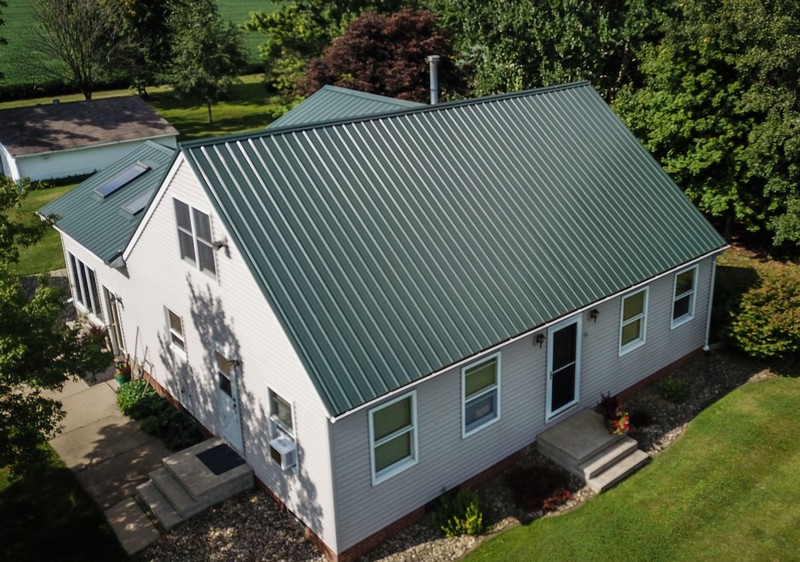
If you are researching metal roofing for your home, you are probably weighing a bigger upfront cost against a promise of decades of performance. Here is the short version: a residential metal roof routinely delivers 50 to 60 years of service life, according to research from the Metal Construction Association, while asphalt shingles typically need replacement every 12 to 20 years. Whether you get that performance depends on five decisions: substrate, coating, panel style, warranty terms, and contractor.
This post answers the questions homeowners ask most at each of those decision points. For the full step-by-step resource, with photos, side-by-side comparisons, and a contractor question list, download the free McElroy Metal Residential Metal Roofing Guide.
How long does a residential metal roof last?
A residential metal roof routinely provides 50 to 60 years of service life, based on a Metal Construction Association service life study of Galvalume® standing seam roof systems. Asphalt shingles run on a 12 to 20 year replacement cycle, so a metal roof is often the last roof a homeowner ever installs.
That gap changes the math on cost. A homeowner who stays in a house for 40 years may pay for two or three shingle roofs, plus tear-off and disposal each time. The metal roof gets paid for once. The longevity also depends on the choices covered in the rest of this guide. A panel with a low-grade substrate and an economy paint system will not deliver the same decades of performance as a properly specified system.
McElroy Metal has manufactured metal roofing since 1963, and many of the company's earliest residential installations remain in service today. The Residential Metal Roofing Guide walks through the research behind these service life numbers.
Why are homeowners switching from shingles to metal roofing?
Most homeowners switch to metal roofing to escape the shingle replacement cycle. Energy savings, weather resistance, recyclability, and curb appeal strengthen the case, but the driving motivation is usually the desire to install one roof and be done with it.
The energy story surprises people. Reflective pigments in modern coating systems create what the industry calls cool metal roofing, which combines high reflectivity with high thermal emittance. Reflectivity measures how much solar energy bounces off the panel surface, while emittance measures how readily the panel releases heat it has absorbed. Together, they keep heat out of the attic and the living space below. Research compiled by the Metal Construction Association shows that cool metal roofing can reduce cooling energy costs by up to 20 percent.
Weather performance matters too. Metal roofing resists fire, hail, and wind, and many insurance companies recognize that performance with premium discounts on homes with metal roofs. Steel panels are also fully recyclable at the end of their service life, unlike shingles, which head to the landfill by the ton with every replacement cycle.
The introduction section of the McElroy guide covers each of these benefits with the supporting research, so you can verify the claims rather than take them on faith.
What are the most common metal roofing myths?
The three most persistent myths about metal roofing are that metal roofs are noisy when it rains, that they attract lightning, and that they make a home hotter. All three are false. Modern residential metal roofs are installed over solid decking and underlayment that deaden rain sound, lightning strikes the tallest object in an area rather than the most conductive one, and reflective coatings lower cooling costs rather than raise them.
The rain noise myth comes from people's experience with metal on open-framed barns and carports, where nothing sits between the panel and the space below. A residential installation is an entirely different assembly. With decking, underlayment, attic insulation, and a ceiling between you and the panels, a metal roof in a rainstorm sounds about the same as any other roof.
Lightning behaves according to height and geography, not material. A metal roof does not increase your home's odds of a strike, and if a strike does occur, a metal roof is noncombustible, which is an advantage rather than a risk.
The McElroy guide addresses nine common myths in total, including denting, rust, and the belief that all metal roofing is the same. That last one deserves its own discussion, because it leads directly into the substrate question below.
Why does the steel substrate matter on a metal roof?
The substrate determines how long a metal roof resists corrosion, which makes it more important than the color most homeowners spend their time choosing. In side-by-side outdoor testing across multiple environments, Galvalume® panels proved two to four times more durable than galvanized panels over a 23-year comparison period.
Galvanized steel has a zinc coating over the base steel, and the thickness of that coating matters. A G100 designation carries 1.0 ounce of zinc per square foot of panel, while a G60 designation carries 0.6 ounces. That means G100 provides 66 percent more protective zinc, which correlates directly with panel longevity. G60 substrates are not appropriate for residential roofing, yet uninformed buyers choose them because no one told them to ask.
Galvalume® takes a different approach, coating the steel with an aluminum-zinc alloy rather than zinc alone. Its field performance has been strong enough that steel mills warrant Galvalume® against rupture or perforation from corrosion. No comparable mill warranty exists for galvanized substrates.
Galvalume® is the standard substrate on most McElroy Metal panels. The substrate section of the Residential Metal Roofing Guide includes the side-by-side test photos, which make the difference hard to argue with.
What is the difference between SMP and Kynar 500 coatings?
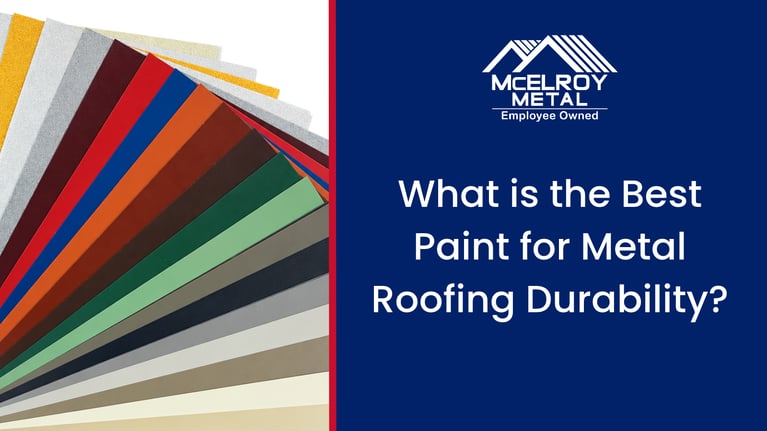
Kynar 500® (PVDF) coatings resist fade and chalk far better than Silicone-Modified Polyester (SMP) coatings. The industry framework is good, better, best: polyester is the baseline, SMP is the step up, and Kynar 500® is the top tier for long-term color retention.
The coating is the part of the roof everyone sees, and it takes the full force of ultraviolet rays, acid rain, and dirt for the life of the roof. Over time, those conditions break down lesser paint systems, producing the faded, chalky appearance that makes a roof look old long before it fails structurally.
A real-world example from the McElroy guide makes the difference concrete. Identical colors were installed on a Louisiana home, one set of panels in SMP and the other in Kynar 500®. After eight years, the SMP panels showed visible fade and chalk. The Kynar 500® panels showed neither.
Be aware that not every manufacturer or contractor offers Kynar 500® as a standard product. When an installer only stocks SMP, the temptation is to sell it as just as good. It is not, and there is currently no paint system that outperforms Kynar 500® for residential applications where appearance matters long term.
McElroy Metal's coatings come from Sherwin-Williams®, and Kynar 500® is available as a standard offering across McElroy's residential product lines, including post-frame products, where many manufacturers offer only SMP.
Do longer warranties mean a better metal roof?
No. Warranty length is a marketing decision, not a performance measure, and products with extended warranties do not always perform better. The substrate and coating you select matter far more to how the roof performs than the number printed on the warranty cover page.
Consumers tend to equate warranty terms with quality, and manufacturers know it. The more useful approach is to read past the headline number and compare what the warranty covers. Fade and chalk warranties, for example, define how much color change is allowed before a claim qualifies, and those thresholds vary widely between SMP and Kynar 500® products. Two warranties with the same year count can promise very different things.
Look at proration schedules, exclusions, transferability if you sell the home, and any maintenance requirements that keep the warranty valid. A shorter warranty with strong coverage terms often protects you better than a long one full of exclusions.
The warranty chapter of the Residential Metal Roofing Guide lists the criteria worth comparing, and McElroy publishes its paint and substrate warranties so you can read the terms before you buy.
Should I choose exposed fastener or concealed fastener panels?
Exposed fastener panels cost less and install faster, while concealed fastener standing seam systems eliminate fastener penetrations through the panel face and offer a step up in both performance and appearance. Budget and performance expectations drive the choice.
Every metal roof panel falls into one of these two families. Exposed fastener panels, such as Max-Rib, attach with screws driven through the panel into the structure, which keeps cost down but leaves the fastener gaskets exposed to weather over the decades. Concealed fastener systems such as Medallion-Lok attach with hidden clips, so no fastener penetrates the weathering surface. They take more material and labor to manufacture and install, which is why they carry a higher price.
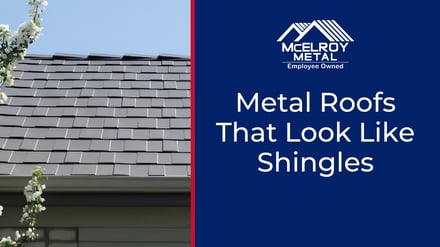
There is also a third path worth knowing about. Specialty panels replicate the look of shingles, slate, or tile while keeping the performance of steel. Systems like Milan steel shingles, Met-Tile, and Tilcor stone-coated steel work well for homeowners who want metal performance with a traditional appearance, or who need to satisfy HOA requirements.
McElroy's Panel Selector Tool narrows the options by application, and the guide's panel chapter illustrates each style so you can compare them visually.
How do I choose a metal roofing contractor?
Choose a contractor who specializes in metal roofing rather than one who installs it occasionally. Metal roofing rewards installation experience, and the questions you ask before signing matter more than the bid number.
A shingle crew that takes the occasional metal job is not the same as a metal roofing specialist. Standing seam systems, in particular, require an understanding of thermal movement, clip spacing, and flashing details that only come with repetition. Ask how many metal roofs the contractor installed in the past year, which manufacturer supplies their panels, whether they have completed manufacturer installation training, and whether they can provide local references with roofs at least five years old.
Treat vague answers as a signal. A contractor who cannot tell you what substrate or coating they recommend, or who steers you toward whatever product they happen to stock, is asking you to absorb the risk of their convenience. Our post on how to select a metal roofing contractor goes into more detail on what to listen for.
The McElroy guide includes a complete list of questions to take into contractor interviews, and the contractor and distributor locator can connect you with installers in your area who regularly work with McElroy products.
Frequently Asked Questions
The questions below address common considerations and help guide residential metal roofing decisions.
Can a metal roof be installed over existing shingles?
Yes, in many cases, a metal roof can be installed directly over one layer of existing shingles in what the industry calls a recover. Recover installation eliminates tear-off cost, disposal fees, and the risk of an open roof during the project. McElroy's 138T Shingle Recover system was designed specifically for this application. Local code and the condition of the existing roof determine eligibility, so have a qualified contractor evaluate first.
Are metal roofs noisy when it rains?
No. Residential metal roofs are installed over solid decking and underlayment, and with attic insulation and a ceiling below, rain on a metal roof sounds about the same as rain on any other roof. The noise reputation comes from metal panels on open-framed barns, which are a completely different assembly.
Do metal roofs attract lightning?
No. Lightning strikes the tallest object in an area regardless of material, so a metal roof does not increase the chance of a strike. If lightning strikes, metal roofing is noncombustible, making it a safer surface than many alternatives.
How much maintenance does a metal roof require?
Very little. Periodic visual inspections, keeping debris out of valleys and gutters, and addressing minor sealant or fastener issues as they appear are typically the extent of it. There is no shingle replacement cycle, no granule loss, and no moss treatment regimen.
Will a metal roof lower my insurance premium?
It can. Many insurance companies offer premium discounts for homes with metal roofs because of their documented performance in fire, hail, and wind. Discounts vary by carrier and state, so ask your agent specifically about impact-resistant and metal roofing credits.
What colors and styles are available for residential metal roofing?
Residential metal roofing comes in dozens of colors and several panel styles, from vertical standing seam to shingles, slate, and tile. McElroy's Visualizer lets you preview panel styles and colors on a photo of your own home before you decide.


.png?width=440&height=293&name=R%20Panel%20vs%20Ag%20Panel%20(1).png)
Comments on this article:
Scroll down to the bottom to submit a comment and join the conversation. Need help or have a question? Please contact us. Looking for a distributor or contractor? Please click here to get started.