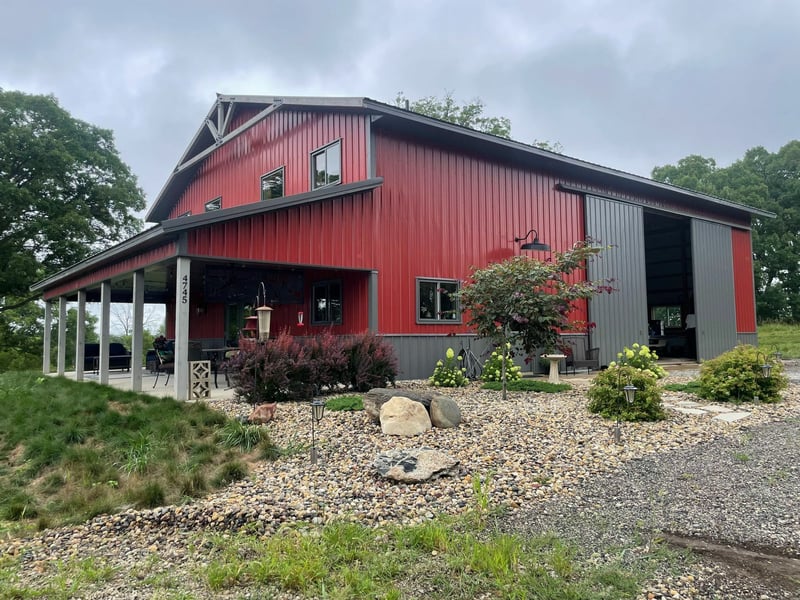
The concept of a combined living and working space is nothing new. Farmers have been finishing portions of their barns for generations, and the practical appeal has never really gone away. What changed everything was a single episode of television.
In a 2016 episode of HGTV's Fixer Upper, Chip and Joanna Gaines converted a 1980s barn outside of Waco, Texas, into an updated farmhouse home. Joanna later noted it was "one of their most unique, and maybe even favorite Fixer Upper renovations to date." That episode didn't just spark a trend — it sent search interest into the stratosphere and introduced the word "barndominium" to a mainstream audience that had never heard it before.
Eight years later, the momentum hasn't let up.
How Big Is the Barndominium Market Right Now?
The numbers tell a clear story. The National Association of Home Builders (NAHB) included barndominiums in its February 2024 Housing Market Index survey, and 7% of single-family builders reported constructing a barndominium within the prior 12 months. That may sound modest, but given where this category started, it represents a significant shift in how residential builders are allocating their work.
There are historically high costs associated with building or buying a traditional home. With traditional home prices surging, cost-effective barndominiums have become more attractive to buyers, and that's not an accident. It's a market responding to a housing affordability crisis that shows no signs of resolving quickly.
Where Are Barndominiums Most Popular — and Where Is Barndo Demand Expanding?
Market data indicates a greater concentration of barndominiums in states like Texas, Colorado, and Oklahoma, though barndo popularity continues to expand throughout the country. One consistent attribute is that the market typically centers in rural areas where larger plots of land are more affordable.
That geographic concentration is real, but the trend lines point outward. Originally popular in Texas and the Midwest, steel buildings and garages with living quarters are now gaining momentum across the Southeastern United States, where rural land availability and rising housing costs have made them especially attractive. States like Kentucky and Tennessee have seen notable upticks, and as Accessory Dwelling Unit (ADU) legislation continues to evolve, even suburban markets are beginning to create openings for barndo-style construction.
Why Are Homeowners Choosing Barndominiums Over Traditional Home Construction?
The short answer is value. But that word covers a lot of ground.
A standard stick-built home in 2024 averaged between $150 and $400 per square foot, with higher-end custom builds surpassing $300 to $450 per square foot. Completed barndominiums typically run $65 to $160 per square foot for standard builds, with high-end custom shop-combo configurations reaching $150 to $300. That cost gap is hard to ignore when families are stretched thin on housing budgets.
Speed also plays a role. The design of barndominiums allows for significantly faster build times than traditional houses. Custom homes can take months to build, while barndominiums can often be completed much faster.
Then there's the flexibility that post-frame and pre-engineered systems offer. One of the most significant features is that these building types require fewer — and often no — interior load-bearing walls, making them a natural fit for homeowners seeking open-concept design. That same structural freedom also makes future modifications far more practical than conventional framing allows.
Explore the EasyFrame Colony model.
What Does the Modern Barndominium Look Like Today?
The early versions were pretty straightforward: a machine shed with a finished interior. Today's barndo is something else entirely.
Modern barndo owners routinely combine multiple construction materials to create a more residential feel. Wall materials often combine stone and metal to add visual interest. Garage doors have become more common than the original sliding doors, and the use of glass to bring outdoor elements in has increased tremendously.
Color is a surprisingly consistent trend. Black and white is currently the top barndo color scheme, and it's held that position for several years running. It's a palette that works particularly well with metal panels — clean, modern, and highly photogenic.
Flooring has evolved from bare concrete to wide-plank luxury vinyl, stained concrete overlays, and even hardwood in living areas. The construction method easily incorporates tall ceiling heights, opening up options for gyms, lofts, and massive floor-to-ceiling fireplaces. Wraparound porches are another popular addition that adds country charm and makes the structure feel more residential from the curb.
Explore the EasyFrame McCormick model.
Is Multi-Generational Living Driving Barndominium Demand?
It's one of the clearest signals in current market data. During COVID-19, the desire for home office space spiked, but as more employees transitioned back to the office post-pandemic, that demand moderated and fell to the number two spot in the American Institute of Architects' 2024 survey. The top requested home feature? In-law and au pair suites.
Barndominiums are a natural answer to that demand. Their large footprints, flexible layouts, and ease of incorporating separate living quarters make them among the most practical platforms for multi-generational housing. They give homeowners new ways to use space, with flexible multi-purpose layouts and a practical solution for families who want to live together while still maintaining some separation.
A separate entrance, a distinct living zone, and shared outdoor space, a well-designed barndo can accomplish all of that without the complexity and cost of building a separate structure.
What Role Does Metal Roofing and Siding Play in Barndominium Construction?
Metal roof and wall panels are a natural fit for barndominiums because they support the durability, style, and low-maintenance performance homeowners want. A reliance on metal for exterior — and often structural — components gives barndominiums and shouses longer life expectancies compared to common construction materials like vinyl siding and asphalt shingles. Traditional materials are more susceptible to weather-related deterioration than metal components, and metal construction minimizes ongoing maintenance.
Metal panel products used in many barndominiums provide optimal durability, with metal panels capable of boasting a 60-plus year lifespan. Metal materials also require minimal upkeep and provide unique resistance to mold, rot, and insects.
For homeowners, the materials conversation matters just as much as the floor plan. The roofing and siding systems you choose will influence long-term performance, maintenance needs, and curb appeal for decades. Both exposed fastener panels and standing seam systems are widely used across barndominium applications, each offering advantages depending on the design, budget, and performance expectations. Standing seam profiles like 238T and Medallion-Lok provide concealed fasteners and are often selected for projects where thermal movement and clean aesthetics are a priority. At the same time, exposed fastener panels continue to represent a significant portion of the market, offering a practical and cost-effective solution that performs well when properly installed.
What Are the Biggest Barriers to Barndominium Permitting, Zoning, and Financing?
Cost and flexibility make barndominiums appealing, but the path to breaking ground isn't always smooth. Local zoning and building code regulations and financing challenges are some of the largest potential barriers to barndominium market growth. Some banking institutions may have different lending parameters for barndominiums. In some locales, permits for residential barndominium projects may not be readily available.
For homeowners, that means asking the right questions early. Before falling in love with a floor plan, it's smart to talk through local code requirements, financing expectations, insulation needs, and finish levels with your lender, builder, and local permitting office. Those early conversations can prevent expensive surprises later.
Financing is improving as the category matures and lenders become more familiar with barndominium valuations. As barndominiums establish a firmer foothold in real estate, understanding and recognition should continue to expand, which may simplify financing and permitting while also supporting resale value.
Is a Barndominium Right for Your Next Home?
The data suggests barndominiums are more than a passing trend. Between housing affordability pressures, interest in flexible floor plans, and demand for multi-generational living, more homeowners are seriously considering this style of construction.
If you're looking for a home that offers open living space, faster construction potential, long-term durability, and design flexibility, a barndominium may be worth exploring. The key is to start with the right structure, the right products, and the right project team.
For homeowners comparing options, McElroy Metal's EasyFrame Metal Buildings offer a strong starting point. They're engineered for the open layouts and design flexibility many barndo buyers want, backed by the technical support and material availability of a manufacturer with more than 60 years in the metal construction industry.


.jpg?width=767&name=Can%20You%20Paint%20a%20Metal%20Roof_%20(4).jpg)
.png?width=440&height=293&name=R%20Panel%20vs%20Ag%20Panel%20(1).png)
Comments on this article:
Scroll down to the bottom to submit a comment and join the conversation. Need help or have a question? Please contact us. Looking for a distributor or contractor? Please click here to get started.